
பாடத் தலைப்பு : சிந்துவெளி நாகரிகம் Indus civilization
PDF டவுன்லோட் செய்ய : இந்த குறிப்புகள் அனைத்தையும் PDF வடிவில் டவுன்லோட் செய்துகொள்ள விரும்புபவர்கள், கீழே உள்ள தேர்வை ATTEND செய்யவும். தேர்வை முடிக்கும் பொழுது உங்களுடைய மதிப்பெண்ணுடன் PDF டவுன்லோட் செய்வதற்கான லிங்க்கும் காட்டப்படும். அதனைக் கிளிக் செய்து PDF டவுன்லோட் செய்து கொள்ளவும்.
இந்த இயலில் மொத்தம் 95 குறிப்புகளும் அவற்றைக் கொண்டு உருவாக்கப்பட்ட 32 கேள்விகளும் உள்ளன.
இந்தத் தேர்வு குறிப்புகள் குறித்த உங்களின் கருத்துக்களை கீழே உள்ள கமெண்ட் பாக்ஸில் தெரிவிக்கவும்
இதற்கு முந்தைய தேர்வினை எழுத கீழே கிளிக் செய்யவும்
தேர்வு - கேள்விகளின் எண்ணிக்கை 32
Results
வாழ்த்துகள். நீங்கள் இந்தத் தேர்வில் தேர்ச்சி பெற்றுள்ளீர்
மீண்டும் இதே தேர்வினை எழுதுவதற்கு கீழே கிளிக் செய்யவும்
அடுத்த தேர்விற்கு செல்ல கீழே கிளிக் செய்யவும்
இந்தக் கேள்விகள் அனைத்தையும் PDF வடிவில் டவுன்லோட் செய்து கொள்ள விரும்புபவர்கள் கீழே கிளிக் செய்யவும்
Tamil Medium Notes – Click here
English Medium Notes – Click here
இந்தக் கேள்விகள் உங்களுக்குப் பிடித்திருந்தால் எங்களைப் பாராட்டுவதற்கு கீழே உள்ள ஏதேனும் ஒரு விளம்பரத்தைக் கிளிக் செய்யவும்.
நீங்கள் இந்தத் தேர்வில் தேர்ச்சி பெறுவதற்கான மதிப்பெண்களைப் பெறவில்லை.
மீண்டும் இதே தேர்வினை எழுதுவதற்கு கீழே கிளிக் செய்யவும்
அடுத்த தேர்விற்கு செல்ல கீழே கிளிக் செய்யவும்
இந்தக் கேள்விகள் அனைத்தையும் PDF வடிவில் டவுன்லோட் செய்து கொள்ள விரும்புபவர்கள் கீழே கிளிக் செய்யவும்
Tamil Medium Notes – Click here
English Medium Notes – Click here
இந்தக் கேள்விகள் உங்களுக்குப் பிடித்திருந்தால் எங்களைப் பாராட்டுவதற்கு கீழே உள்ள ஏதேனும் ஒரு விளம்பரத்தைக் கிளிக் செய்யவும்.



#1. நடன மாது' என்று குறிப்பிடப்படுகிற சிலையைப் பார்த்த ___________ "முதலில் இந்தச் சிலையை நான் பார்த்த பொழுது இது வரலாற்றிற்கு முந்தைய காலத்தின் உருவாக்க முறையைச் சார்ந்தது என்று நம்புவதற்குக் கடினமாக இருந்தது. ஏனெனில் இதுபோன்று உருவாக்கம் பண்டையமக்களுக்கு கிரேக்க காலம் வரை தெரியவில்லை . இவை ஏறத்தாழ 3000 ஆண்டுகளுக்கு முற்பட்டதாக இருக்கலாம் என நினைத்தேன். இச்சிலைகள் அக்கால கட்டத்துக்கு உரியதாகவே இருந்தன" என்றார். When ______________ saw the statuette known as the dancing girl, he said, “When I first saw them I found it difficult to believe that they were pre-historic modeling. Such as this was unknown in the ancient worlds up to the age of Greece. I thought that these figures had found their way into levels some 3000 years old to which they properly belonged”
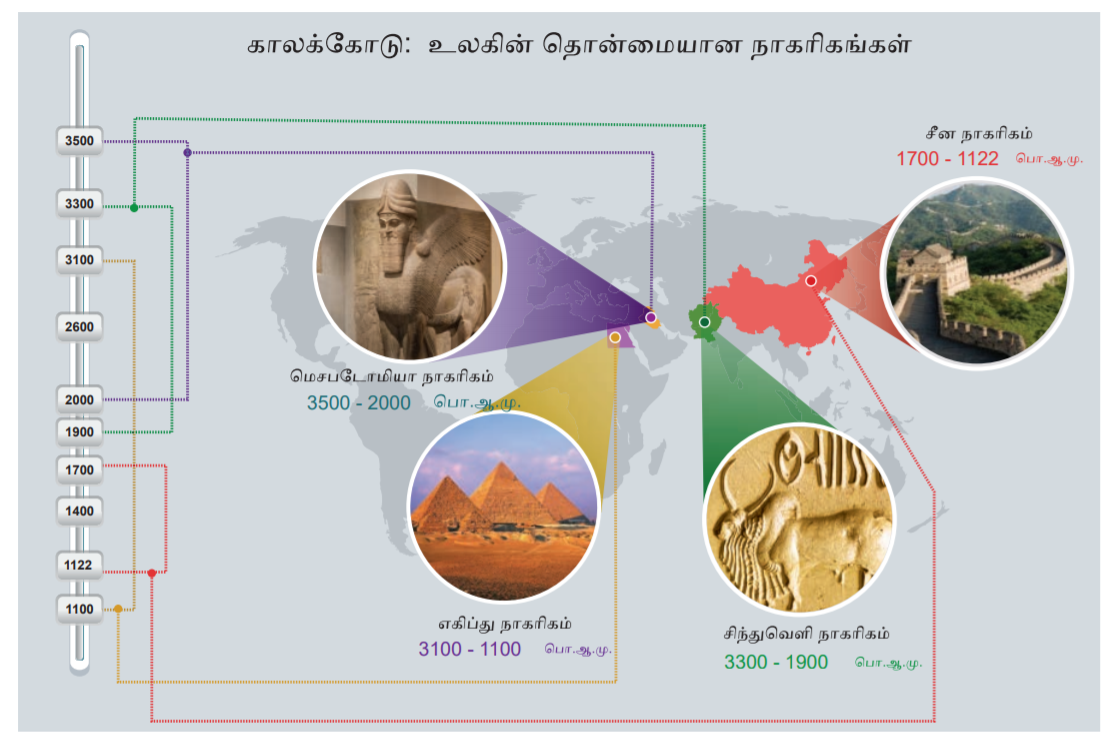
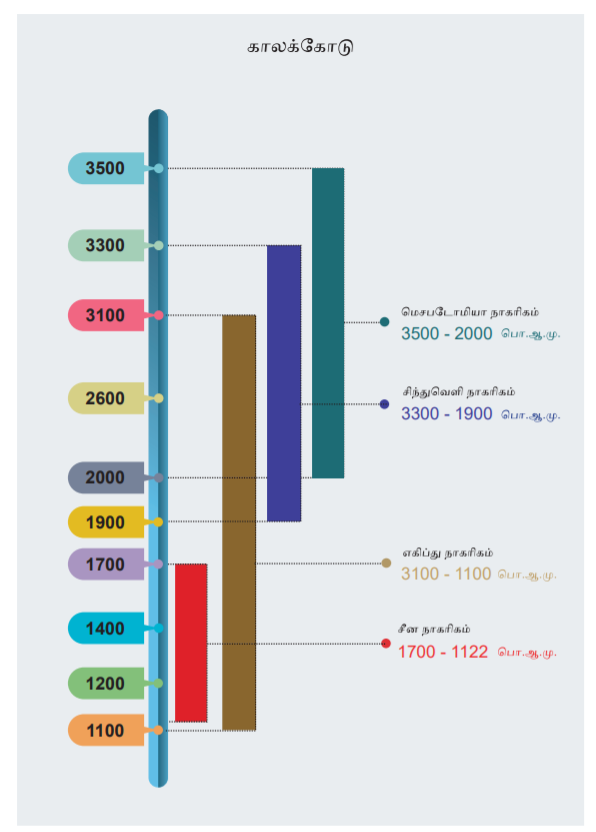
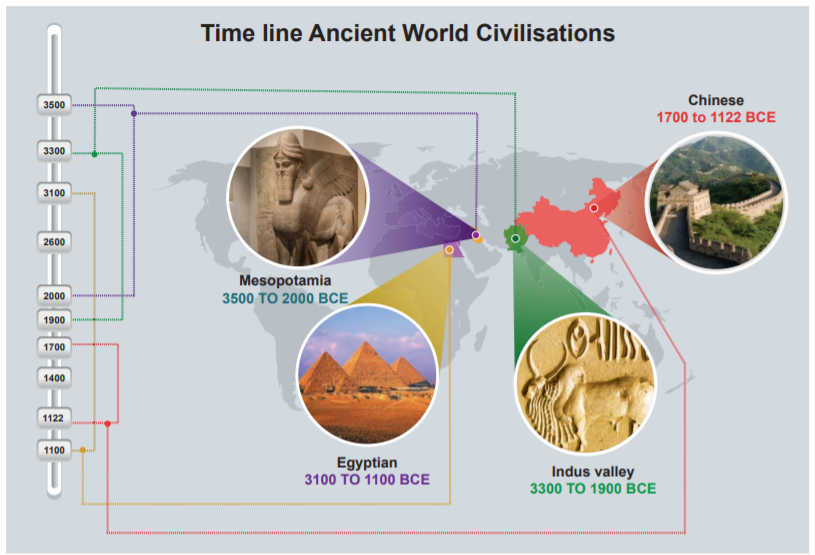
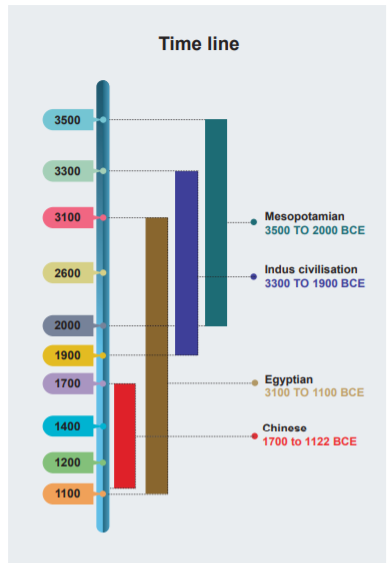
#2. மெசபடோமிய நாகரிகத்தின் கால இடைவெளி என்ன? What is the period of Mesopotamian civilization?
#3. கருத்து 1 : வடிகால் கழிவு நீர் தேங்காமல் செல்ல வசதியாக லேசான மென் சரிவைக் கொண்டிருந்தது. Statement 1:In harappa Each drain had a gentle slope so that water could flow. கருத்து 2: கழிவுப்பொருட்களை அப்புறப்படுத்துவதற்கான துளைகளும் சரியான இடைவெளியில் அமைக்கப்பட்டிருந்தன.Statement 2:In harappa Holes were provided at regular intervals to clear the drains.
#4. லாகூரில் இருந்து கராச்சிக்கு ரயில் பாதை எப்பொழுது அமைக்கப்பட்டது? When was the railway line from Lahore to Karachi established?
#5. கருத்து 1 : சிந்து வெளியில் அரண்மனைகளோ, வழிபாட்டுத் தலங்களோ இருந்ததை தீர்மானிக்கக் கூடிய ஆதாரங்கள் எதுவும் கிடைக்கவில்லை. Statement 1:There is no conclusive evidence of the presence of palaces or places of worship in indus கருத்து 2: சிந்து வெளியில் வீடுகள் சுட்ட செங்கற்களாலும் சுண்ணாம்புக் கலவையாலும் கட்டப்பட்டிருந்தன. Statement 2:The houses were built using baked bricks and mortar in indus
தேர்வு எழுதி முடிக்கும் பொழுது உங்களுடைய மதிப்பெண் மற்றும் PDF டவுன்லோட் செய்வதற்கான லிங்க் காட்டப்படும்
அடுத்து தேர்விற்கான பாட குறிப்புகளை காண கீழே கிளிக் செய்யவும்
எங்கள் இணையதளத்தில் 6-ஆம் வகுப்பு முதல் 12-ஆம் வகுப்பு வரை உள்ள அனைத்து பாடங்களுக்குமான ஒரு வரி குறிப்புகள் அனைத்தும் பாடவாரியாக பதிவேற்றம் செய்யப்பட்டுள்ளது.
ஒவ்வொரு பாடத்திலிருந்தும் எடுக்கப்பட்ட குறிப்புகளை கொண்டு தயாரிக்கப்பட்ட தேர்வும் (TEST) கீழே கொடுக்கப்பட்டுள்ளது. குறிப்புகள் அனைத்தையும் படித்துவிட்டு அந்த தேர்வை எழுதிப் பார்க்கும் வசதியும் அளிக்கப்பட்டுள்ளது.
ஒருவரி வினாக்கள் அனைத்தும் பாடப்புத்தகத்தை வரி வரியாகப் படித்து எடுக்கப்பட்டதாகும்.
இந்தத் தொகுப்பில் உள்ள அனைத்து வினாக்களையும் நீங்கள் முறையாக பயிற்சி செய்தாலே தமிழகத்தில் நடைபெறும் அனைத்து வகையான போட்டித் தேர்வுகளிலும் வெற்றி பெறலாம்.
இது போன்று அனைத்து பாடங்களுக்குமான, வரி வரியாகப் படித்து எடுக்கப்பட்ட வினாக்களை பெற கீழே உள்ள டெலிகிராம்/ வாட்சப் குரூப்பில் இணைந்து கொள்ளவும்.
Telegram : https://t.me/THAMIZHPRIYANKALVI1
Whatsapp : https://chat.whatsapp.com/CAJ20fhIAwEHEmeagezQBS
youtube channel : https://www.youtube.com/c/ThamizhpriyanKalvi
Website: http://tpnkalvi.in/
வரி வரியாகப் படித்து எடுக்கப்பட்ட ஒரு வரி குறிப்புகள்
- மனிதர்கள் தங்கள் குடியேற்றங்களாக நதிக்கரைகளைக் கீழ்க்கண்ட காரணங்களுக்காகத் தேர்ந்தெடுத்தார்கள்.
- வளமான மண்
- ஆறுகளில் பாயும் நன்னீர் குடிப்பதற்கும் கால்நடைகளின் தேவைகளுக்கும், நீர்ப்பாசனத்திற்கும் பயன்பட்டன.
- போக்குவரத்துக்கு ஏற்ற வழிகளாக இருந்தன.
- வளமான மண்
- ஹரப்பா நகரத்தின் இடிபாடுகளை முதன்முதலில் சார்லஸ் மேசன் என்ற ஆங்கிலேயர் தமது நூலில் விவரித்தார்.
- சார்லஸ் மேசன் கிழக்கிந்திய கம்பனியில் பணிபுரிந்த படைவீரரும், ஆராய்ச்சியாளரும் ஆவார்.
- சார்லஸ் மேசன் தற்போது பாகிஸ்தானில் உள்ள இந்தியாவின் வடமேற்கு பகுதியில் பார்வையிட்டபோது சில செங்கல் திட்டுகள் இருப்பதைக் கண்டார். "அந்த பாழடைந்த செங்கற்கோட்டை உயரமான சுவர்களுடனும், கோபுரங்களுடனும் ஒரு மலை மீது கட்டப்பட்டுள்ளது" எனக் குறிப்பிட்டார். இதுதான் ஹரப்பா இருந்ததற்கான முதல் வரலாற்று ஆதாரம்.
- 1856-ல் பொறியாளர்கள் லாகூரில் இருந்து கராச்சிக்கு இரயில் பாதை அமைக்கும் பொருட்டு நிலத்தைத் தோண்டிய பொழுது அதிகமான சுட்ட செங்கற்கள் கண்டறியப்பட்டன. அவர்கள் அவற்றின் முக்கியத்துவத்தை உணராமல் அவற்றை இரயில் பாதைக்கு 'இடையில் போடப்படும் கற்களுக்குப் பதிலாக பயன்படுத்தினர்.
- 1920-ல் தொல்பொருள் ஆய்வாளர்கள் ஹரப்பா மற்றும் மொஹஞ்ச-தாரோ நகரங்களை அகழாய்வு செய்ய ஆரம்பித்தனர். அப்பொழுது நீண்டநாள் மறைந்து கிடந்த நகரத்தின் எஞ்சிய பகுதிகளை உலகின் பார்வைக்கு கொண்டு வந்தார்கள்.
- 1924-ல் இந்திய தொல்பொருள் ஆய்வுத்துறையின் இயக்குநர் ஜான் மார்ஷல் ஹரப்பாவிற்கும், மொஹெஞ்ச-தாரோவிற்கும் இடையே பொதுவான அம்சங்கள் இருப்பதைக் கண்டறிந்தார். அவை இரண்டுமே ஒரு பெரிய நாகரிகத்தை சார்ந்த வெவ்வேறு பகுதிகள் என்ற முடிவுக்கு வந்தார்.
- நாகரிகம் என்ற வார்த்தை பண்டைய லத்தீன் மொழி வார்த்தையான 'சிவிஸ்' (CIVIS) என்பதிலிருந்து வந்தது. இதன் பொருள் 'நகரம்' ஆகும்.
- ஹரப்பாவிலும், மொஹஞ்ச-தாரோவிலும் கண்டுபிடிக்கப்பட்டுள்ள மட்பாண்டங்களுக்கிடையே சிறிய அளவு வேறுபாடு இருப்பதை ஆராய்ச்சியாளர்கள் கண்டறிந்தனர். எனவே, ஹரப்பா நாகரிகம் மொஹஞ்ச-தாரோவை விட பழமையானது என முடிவுக்கு வருகின்றனர்.
- கால வரையறை
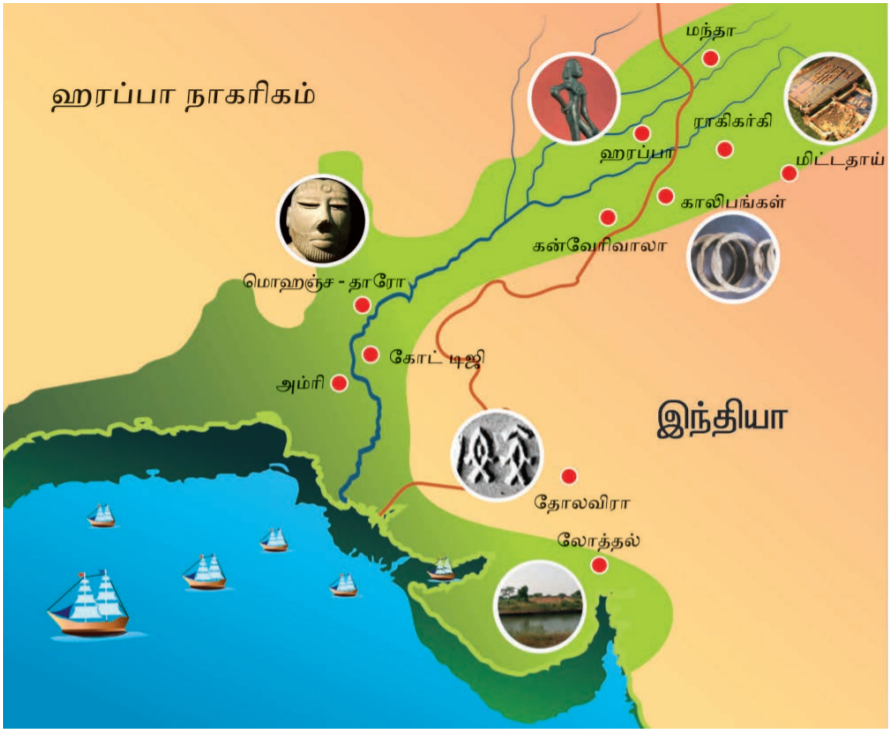
புவி எல்லை - தெற்கு ஆசியா
காலப்பகுதி - வெண்கலக்காலம்
காலம் - பொ.ஆ.மு 3300 -1900(கதிரியக்க கார்பன் வயதுக் கணிப்பு முறை மூலம் முடிவு செய்யப்பட்டது)
பரப்பு - 13 லட்சம் சதுர கி.மீ
நகரங்கள் - 6 பெரிய நகரங்கள்
கிராமங்கள் - 200க்கும் மேற்பட்டவை - தொல்லியல் துறை (ASI - Archaelogical survey of india) - 1861 ஆம் ஆண்டு அலக்ஸாண்டர் கன்னிங்ஹாம் என்ற நிலஅளவையாளர் உ தவியுடன் நிறுவப்பட்டது. இதன் தலைமையகம் புது தில்லியில் உள்ளது.
- வெண்கலக் காலம் - மக்கள் வெண்கலத்தாலான பொருட்களைப் பயன்படுத்திய காலம்.
- நகர நாகரிகம் - ஹரப்பா நாகரிகம் ஒரு நகர நாகரிகம் எனலாம்.
அதற்கான காரணங்கள் :
சிறப்பான நகரத் திட்டமிடல்
சிறப்பான கட்டிடக்கலை வேலைப்பாடு
தூய்மைக்கும், பொது சுகாதாரத்திற்கும் கொடுக்கப்பட்ட அதிக முன்னுரிமை
தரப்படுத்தப்பட்ட எடைகள் மற்றும் அளவீடுகள்
விவசாய மற்றும் கைவினைத் தொழில்களுக்கான திடமான அடித்தளம் - ஹரப்பா நாகரிகத்தின் தனித் தன்மை
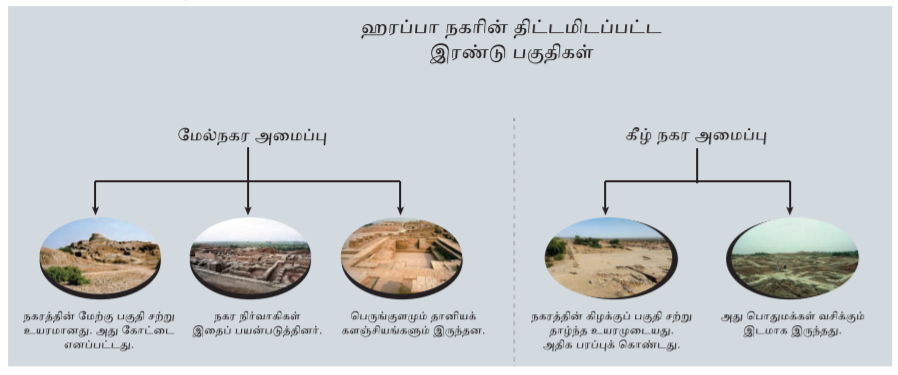
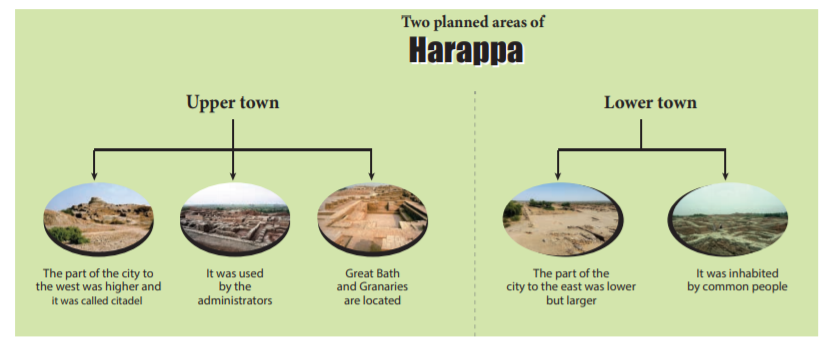
சிந்துவெளி நாகரிகத்தின் சிறப்பம்சமே திட்டமிட்ட நகர அமைப்பு ஆகும். நகரம் திட்டமிடப்பட்ட இரண்டு பகுதிகளாக இருந்தது. - மெஹெர்கர் - சிந்து வெளி நாகரிகத்துக்கு முன்னோடி
- மெஹெர்கர் புதிய கற்கால மக்கள் வாழ்ந்த ஒர் இடம் ஆகும். இது பாகிஸ்தான் நாட்டில் பலுச்சிஸ்தான் மாநிலத்தில் போலன் ஆற்றுப் பள்ளத்தாக்கில் அமைந்துள்ளது.
- மெஹெர்கர் தொடக்க கால மனிதர்கள் வாழ்ந்ததாகக் கண்டறியப்பட்ட இடங்களுள் ஒன்று. மக்கள் வேளாண்மையிலும், கால்நடை வளர்ப்பிலும் ஈடுபட்டதற்கான சான்று இங்கு கிடைத்துள்ளது. பொ.ஆ.மு. 7000-ஐ ஒட்டிய காலத்திலேயே மெஹெர்கரில் நாகரிகத்துக்கு முந்தைய வாழ்க்கை நிலவியதற்கான தொல்லியல் சான்றுகள் கண்டுபிடிக்கப்பட்டுள்ளன.
- ஹரப்பா தெருக்கள் சட்டக வடிவமைப்பை கொண்டிருந்தன.
- தெருக்கள் நேராக அமைக்கப்பட்டிருந்தன. அவை வடக்கு தெற்காகவும், கிழக்கு மேற்காகவும் சென்றன. ஒன்றை ஒன்று செங்கோணத்தில் வெட்டிக் கொள்ளும் படியும் இருந்தன.
- சாலைகள் அகலமாகவும் வளைவான முனைகளைக் கொண்டதாகவும் இருந்தன. வீடுகள், தெருக்களின் இரு ஓரங்களிலும் சீராக அமைக்கப்பட்டிருந்தன. வீடுகள் ஒன்று அல்லது இரண்டு மாடி அடுக்குகளை உடையனவாக காணப்படுகின்றன.
- பெரும்பாலான வீடுகள் பல அறைகளையும் ஒரு முற்றத்தையும், ஒரு கிணற்றையும் கொண்டிருந்தன. ஒவ்வொரு வீட்டிலும் கழிவறையும், குளியலறையும் இருந்திருக்கின்றன.
- வீடுகள் சுட்ட செங்கற்களாலும் சுண்ணாம்புக் கலவையாலும் கட்டப்பட்டிருந்தன. சூரிய வெப்பத்தில் உலர வைக்கப்பட்ட செங்கற்களும் பயன்படூத்தப்பட்டன. பெரும்பாலான செங்கற்கள் சீரான அளவுகள் உடையதாகவே இருந்தன. கூரைகள் சமதளமாக இருந்தன.
- அரண்மனைகளோ, வழிபாட்டுத் தலங்களோ இருந்ததை தீர்மானிக்கக் கூடிய ஆதாரங்கள் எதுவும் கிடைக்கவில்லை.
- கட்டடங்கள் கட்டுவதற்கு சுட்ட செங்கற்கள் பயன்படுத்தப்படுகின்றன, ஏனென்றால், அவை வலுவானவை, கடினமானவை, நிலைத்து நிற்கக் கூடியவை, நெருப்பைக் கூட தாங்குபவை. மேலும், அவை நீரினால் கரைவதில்லை.
- கழிவு நீர் அமைப்பு - ஏறத்தாழ எல்லா நகரங்களிலும் மூடப்பட்ட கழிவு நீர் வடிகால் அமைப்பு இருந்தது. வடிகால்கள் செங்கற்களைக் கொண்டும் கல்தட்டைகளைக் கொண்டும் மூடப்பட்டிருந்தன.
- வடிகால் கழிவு நீர் தேங்காமல் செல்ல வசதியாக லேசான மென் சரிவைக் கொண்டிருந்தது. கழிவுப்பொருட்களை அப்புறப்படுத்துவதற்கான துளைகளும் சரியான இடைவெளியில் அமைக்கப்பட்டிருந்தன.
- வீட்டிலிருந்து கழிவுநீர் பல தெருக்களின் கீழ் அமைக்கப்பட்டிருந்த குழாய்கள் மூலமாக முக்கிய வடிகால்களைச் சென்றடையுமாறு அமைக்கப்பட்டிருந்தது
- ஒவ்வொரு வீட்டிலும் திடக் கழிவுகளைத் தேக்குவதற்கான குழிகள் இருந்தன. அவை திடக்கழிவுகளைத் தேக்கி, கழிவு நீரை மட்டும் வெளியேற்றின.
- பெருங்குளம் - பெருங்குளமானது நன்கு அகன்று, செவ்வக வடிவத்தில் அமைந்திருந்த நீர்த்தேக்கம் ஆகும். இது நகரின் நடுவில் அமைக்கப்பட்டுள்ளது. நீர் கசியாத கட்டுமானத்துக்கான மிகப் பழமையான சான்று எனலாம்.
- பெருங்குளத்தின் சுவர்கள் சுட்ட செங்கற்களால் கட்டப்பட்டு, நீர் கசியாமல் இருப்பதற்காக சுவரிலும், தளத்திலும் பல அடுக்குகள் இயற்கைத் தார் கொண்டு பூசப்பட்டிருந்தது.
- வடபுறத்திலிருந்தும், தென்புறத்திலிருந்தும் குளத்திற்குச் செல்ல படிக்கட்டுகள் அமைக்கப்பட்டுள்ளன. குளத்தின் பக்கவாட்டில் மூன்று புறமும் அறைகள் உள்ளன.
- அருகில் இருந்த கிணற்றில் இருந்து நீர் இறைக்கப்பட்டு பெருங்குளத்தில் விடப்பட்டது. உபயோகப்படுத்தப்பட்ட நீர் வெளியேறவும் வகை செய்யப்பட்டிருந்தது.
- தானியக் களஞ்சியம் - செங்கற்களால் அடித்தளமிடப்பட்ட, பெரிய, உறுதியான கட்டட அமைப்பு. இவை தானியங்களைச் சேகரித்து வைப்பதற்காகப் பயன்படுத்தப்பட்டன.
- தானியக் களஞ்சிய தள வெடிப்புகளில் கோதுமை, பார்லி, தினைவகைகள், எள் மற்றும் பருப்பு வகைகளின் மிச்சங்கள் சிதறிக் காணப்பட்டன.
- செங்கற்களால் கட்டப்பட்ட சுவர்களைக் கொண்ட தானியக் களஞ்சியம் ஒன்று ஹரியானா மாநிலத்தில் உள்ள ராகிகர்கியில் கண்டுபிடிக்கப்பட்டுள்ளது. இது முதிர்ச்சியடைந்த ஹரப்பா காலத்தைச் சார்ந்தது.
- மாபெரும் கட்டடங்கள்
மொஹஞ்ச-தாரோவில் இருந்த இன்னொரு மிகப்பெரும் பொதுக் கட்டடம், கூட்ட அரங்கு ஆகும்.
இது 20 தூண்கள் 4 வரிசைகளை கொண்டு பரந்து விரிந்த கூடம் ஆகும். - ஹரப்பா மக்கள் பெரும் வணிகர்களாக இருந்தார்கள்.
- தரப்படுத்தப்பட்ட எடைகள் மற்றும் அளவைகள் அவர்களால் பயன்படுத்தப்பட்டன.
- பொருட்களின் நீளத்தை அளவிட, அளவுகள் குறிக்கப்பட்ட குச்சிகளைப் பயன்படுத்தினார்கள்.
- அவர்கள் சக்கர வண்டிகளைப் பயன்படுத்தினர்.
- ஆரக்கால் இல்லாத, திடமான சக்கரங்களைப் பயன்படுத்தினர்.
- மெசபடோமியாவுடன் விரிவான கடல் வணிகம் நடைபெற்றிருக்கிறது.
- சிந்து வெளி முத்திரைகள் தற்கால ஈராக், குவைத் மற்றும் சிரியா ஆகிய பகுதிகளை குறிக்கும் பண்டைய மெசபடோமியாவில் உள்ள சுமேர் பகுதிகளில் கிடைத்துள்ளது, இதை உறுதிப்படுத்துகிறது.
- சுமேரியாவின் அக்காடிய பேரரசிற்குட்பட்ட அரசன் நாரம் - சின் என்பவர் சிந்து வெளிப் பகுதியிலுள்ள மெலுக்கா என்னும் இடத்தில் இருந்து அணிகலன் வாங்கியதாகக் குறிப்பு எழுதியுள்ளார்.
- பாரசீக வளைகுடா மற்றும் மெசபடோமியாவில் கண்டுபிடிக்கப்பட்டதைப் போன்று உருளை வடிவ முத்திரைகள் சிந்து வெளிப்பகுதியிலும் காணப்படுகின்றன. இது இந்த இரு பகுதிகளிலும் வணிகம் நடந்ததைக் காட்டுகிறது .
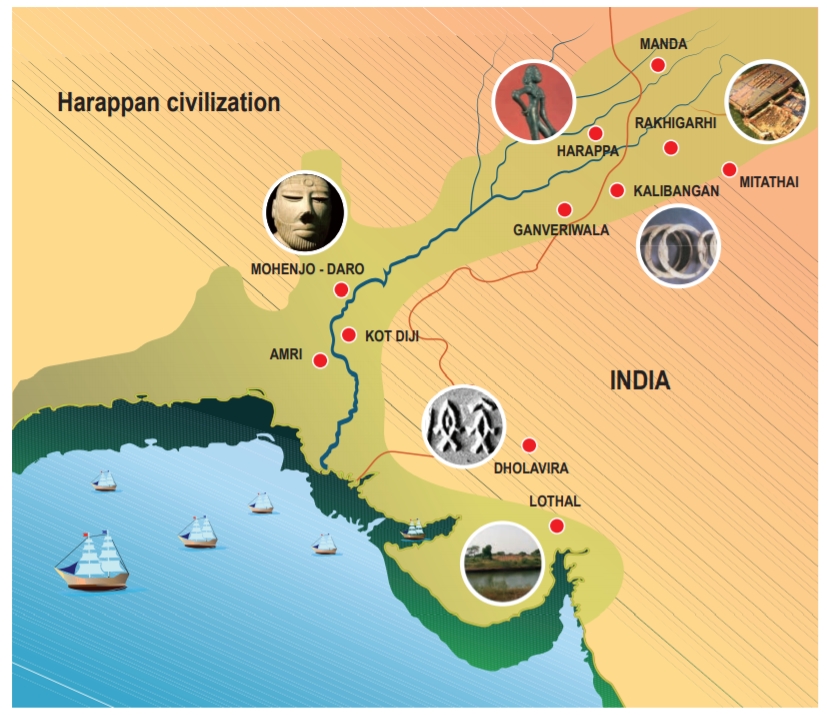
- தற்கால குஜராத்திலுள்ள லோதலில் கப்பல் கட்டும் மற்றும் செப்பனிடும் தளம் ஒன்று கண்டுபிடிக்கப்பட்டுள்ளது. இது அவர்கள் மேற்கொண்ட கடல் வணிகத்தை உறுதிப்படுத்துகிறது.
- கப்பல் கட்டும் தளம் - லோத்தல்
- லோதல் என்னும் இடம் குஜராத்தில் சபர்மதி ஆற்றின் ஒரு துணை ஆற்றின் கரையில் அமைந்துள்ளது.
- மொகஞ்ச-தாரோ - தலைவர்
- அமர்ந்த நிலையில் உள்ள ஓர் ஆண் சிலை மொகஞ்சதாரோவில் உள்ள ஒரு கட்டிடத்தில் இருந்து கண்டுபிடிக்கப்பட்டுள்ளது.
- அது நெற்றியில் ஒரு தலைப்பட்டையுடனும் வலது கை மேல்பகுதியில் ஒரு சிறிய அணிகலனுடனும் காணப்படுகிறது.
- அதன் தலை முடியும், தாடியும் நன்றாக ஒழுங்குபடுத்தப்பட்டு காணப்படுகிறது.
- காதுகளின் கீழ் காணப்படும் இரு துளைகள், தலையில் அணியப்படும் அணிகலனைக் காதுவரை இணைக்க ஏற்படுத்தப்பட்டிருக்கலாம் .
- இடது தோள் பூக்களாலும், வளையங்களாலும் அலங்கரிக்கப்பட்ட ஒரு மேலங்கியால் மூடப்பட்டுள்ளது. இது போன்ற வடிவமைப்பு அப்பகுதியில் உள்ள மக்களால் பயன்படுத்தப்படுவது இன்றளவும் குறிப்பிடத்தக்கது.
- அமர்ந்த நிலையில் உள்ள ஓர் ஆண் சிலை மொகஞ்சதாரோவில் உள்ள ஒரு கட்டிடத்தில் இருந்து கண்டுபிடிக்கப்பட்டுள்ளது.
- தொழில் நுட்பம் சிந்துவெளி நாகரிக மக்கள் தரப்படுத்தப்பட்ட எடைகள் மற்றும் அளவீடுகளை உருவாக்கினர்.
- குஜராத் மாநிலத்தில் கண்டுபிடிக்கப்பட்ட தந்தத்தினாலான அளவுகோல் 1704 மி.மீ. வரை சிறிய அளவீடுகளைக் கொண்டுள்ளது. (அதன் சமகாலத்திய நாகரிகங்களில் கண்டுபிடிக்கப்பட்ட அளவுகோல்களில் இது தான் மிகச் சிறிய பிரிவு ஆகும்)
- மனிதர்களால் முதன் முதலில் கண்டு பிடிக்கப்பட்ட மற்றும் உபயோகப்படுத்தப்பட்ட உலோகம் - செம்பு.
- மொஹெஞ்ச-தாரோவில் வெண்கலத்தால் ஆன சிறிய பெண் சிலை கிடைத்தது.
- 'நடன மாது' என்று குறிப்பிடப்படுகிற இந்தச் சிலையைப் பார்த்த சர் ஜான் மார்ஷல் "முதலில் இந்தச் சிலையை நான் பார்த்த பொழுது இது வரலாற்றிற்கு முந்தைய காலத்தின் உருவாக்க முறையைச் சார்ந்தது என்று நம்புவதற்குக் கடினமாக இருந்தது. ஏனெனில் இதுபோன்று உருவாக்கம் பண்டையமக்களுக்கு கிரேக்க காலம் வரை தெரியவில்லை . இவை ஏறத்தாழ 3000 ஆண்டுகளுக்கு முற்பட்டதாக இருக்கலாம் என நினைத்தேன். இச்சிலைகள் அக்கால கட்டத்துக்கு உரியதாகவே இருந்தன" என்றார்.
- கே.வி.டி கொற்கை - வஞ்சி - தொண்டி) வளாகம்: பாகிஸ்தானில் இன்றும் கொற்கை, வஞ்சி, தொண்டி, மத்ரை, உறை, கூடல்கர் என்ற பெயர் கொண்ட இடங்கள் உள்ளன.
- கொற்கை, பூம்புகார் போன்ற சங்க கால நகரங்கள் மற்றும் துறைமுகங்களின் பெயர்களுடன் உள்ள இடங்கள் ஆப்கானிஸ்தானில் உள்ளன.
- ஆப்கானிஸ்தானில் உள்ள ஆறுகளான காவ்ரி, பொருண்ஸ் மற்றும் பாகிஸ்தானில் உள்ள ஆறுகளான காவிரி வாலா மற்றும் பொருனை ஆகிய பெயர்கள் தமிழ்ச் சொற்களை முழுமையாகப் பிரதிபலிக்கின்றன.
- சிந்துவெளி மக்களின் வாழ்க்கை முறை
உடை-
- பொதுவாக பருத்தி ஆடைகளே பயன்பாட்டில் இருந்தன.
- அங்கு கண்டுபிடிக்கப்பட்ட நூலைச் சுற்றி வைப்பதற்கான சுழல் அச்சுக்கள் மூலம் அவர்கள் நூற்கவும் செய்திருக்கின்றனர் என்று தெரிகிறது.
- கம்பளி ஆடைகளும் உபயோகப்படுத்தப்பட்டன.
-
- குடியிருப்புகள் தரைமட்டத்திலிருந்து நன்கு உயர்த்தப்பட்ட தளங்களில் கட்டப்பட்டிருந்தன.
- சிந்துவெளிமக்களிடம் படை இருந்ததற்கான எந்த ஆதாரமும் இல்லை. சில ஆயுதங்கள் மட்டுமே அங்கிருந்து கிடைத்துள்ளன.
- அவர்கள் தங்களின் மேம்பட்ட நிலையை அவர்களுடைய ஆடைகள், விலைமதிப்பற்ற நகைகள் மற்றும் மேம்பட்ட நகர வாழ்க்கை மூலம் வெளிப்படுத்தினர்.
- ஆண், பெண் இருபாலரும் ஆபரணங்களை விரும்பி அணிந்திருக்கின்றனர்.
- கழுத்தணிகள், கையணிகள், வளையல்கள், மோதிரங்கள், காதணிகள் மற்றும் காலணிகள் முதலியவற்றையும் அணிந்தனர்.
- தங்கம், வெள்ளி, தந்தம், சங்கு, செம்பு, சுடுமண் மற்றும் விலையுயர்ந்த கற்களால் அணிகலன்கள் செய்யப்பட்டிருந்தன.
- சிந்துவெளி மக்களுக்கு இரும்பின் பயன் பற்றி தெரியாது.
- சிந்துவெளி மக்கள் ஆபரணம் செய்ய சிவப்பு நிற மணிக்கற்களைப் (Carnelian) பயன்படுத்தினர்.
- நகரத் திட்டமிடலை நிர்வகிக்கவும், வணிகத்தை மேம்படுத்தவும், நகரத்தில் அமைதியை நிலைநாட்டவும், வடிகால் அமைப்பைப் பராமரிக்கவும், ஓர் அதிகார மையம் இருந்து இருக்கவேண்டும் என்று வரலாற்றாசிரியர்கள் நம்புகின்றனர்.
- சிந்துவெளி மக்களின் முதன்மையான தொழில் பற்றி எதுவும் தெரியவில்லை, எனினும் வேளாண்மை, கைவினைப் பொருட்கள் செய்தல், பானை வனைதல், அணிகலன்கள் செய்தல் போன்றவற்றில் ஈடுபட்டனர் என தெரிகிறது.
- சிந்துவெளியில் வர்த்தகர்கள், வணிகர்கள் மற்றும் கைவினைஞர்களும் இருந்துள்ளனர்.கால்நடை வளர்ப்பும் அவர்களது தொழிலாக இருந்தது. அவர்கள் சக்கரத்தின் பயனையும் அறிந்திருந்தனர்.
- மட்பாண்டங்களைச் சக்கரங்கள் கொண்டு உருவாக்கினர். அவை தீயிலிட்டுச் சுடப்பட்டன. மட்பாண்டங்கள் சிவப்பு வண்ணத்தில் இருந்தன. அதில் கருப்பு வண்ணத்தில் அழகிய வேலைப்பாடுகளைச் செய்தனர். அங்கு கிடைத்த உடைந்த பானைத் துண்டுகள் விலங்குகளின் உருவங்களுடனும், வடிவியல் வடிவமைப்புகளுடனும் காணப்படுகின்றன.
- சிந்துவெளி மக்களின் வழிபாடு மற்றும் அவர்களின் மத நடைமுறைகள் பற்றி அறிய எந்த ஓர் ஆதாரமும் கிடைக்க வில்லை .
- அங்கு கிடைக்கப்பெற்ற பெண் சிலைகள் மூலம் சிந்து வெளி மக்களிடையே தாய் தெய்வ வழிபாடு இருந்திருக்கலாம் எனத் தெரிகிறது .
- கலைத்திறன்
- பொம்மை வண்டிகள், தலையையும், கால்களையும் அசைக்கக்கூடிய பசுபொம்மைகள், களிமண் பந்துகள், சிறிய பொம்மைகள், சிறிய களிமண் குரங்கு, சுடுமண் பொம்மைகள், கொட்டைகளைக் கொறிக்கும் அணில் பொம்மைகள், மண்ணால் ஆன நாய்கள், நடனமாடும் ஆண் பொம்மை போன்றவையும் கிடைத்துள்ளன.
- சுடுமண்ணால் செய்யப்பட்ட பல்வேறு வகையான பொம்மைகள் மக்களின் விளையாட்டு மற்றும் பொழுதுபோக்கு ஆர்வத்தைக் காட்டுகிறது.
- பொ.ஆ.மு 1900 ஆம் ஆண்டில் ஹரப்பா நாகரிகம் சரியத் தொடங்கியது. அதற்குக் கீழ்க்கண்டவை காரணங்களாக அமைந்திருக்கலாம்.
- ஆற்றின் கரையில் உள்ள அதன் நகரங்களில்அடிக்கடி ஏற்பட்ட வெள்ளப்பெருக்கு
- சுற்றுச்சூழல் மாற்றம்
- படையெடுப்பு
- இயற்கைச் சீற்றங்கள்
- காலநிலை மாற்றம்
- காடுகள் அழிதல்
- தொற்று நோய்த் தாக்குதல்
- சிந்து வெளி நாகரிகம் - பொதுவான உண்மைகள்
- உலகின் மிகப்பழமையான நாகரிகங்களில் ஒன்று .
- பழமையான நான்கு நாகரிகங்களில் பெரிய பரப்பளவு கொண்டது.
- உலகின் முதல் திட்டமிடப்பட்ட நகரங்கள்.
- மேம்பட்ட சுகாதாரம் மற்றும் வடிகால் அமைப்பு.
- சுத்தம் மற்றும் சுகாதாரம் பற்றிய உணர்வு மேலோங்கியிருந்தது.
- முதல் எழுத்து வடிவம் சுமேரியர்களால் உருவாக்கப்பட்டது.
- மொஹஞ்ச-தாரோவில் தொல்பொருள் ஆராய்ச்சி நடைபெறும் இடம் உலகப் பாரம்பரியத் தளமாக யுனெஸ்கோ அமைப்பால் தேர்ந்தெடுக்கப்பட்டுள்ளது.
- கதிரியக்க கார்பன் வயதுக்கணிப்பு முறை
தொல்லியல் ஆய்வாளர்களுக்கான தரப்படுத்தப்பட்ட முறை கார்பனின் கதிரியக்க ஐசோடோப் ஆன கார்பன்-14, ஐப் பயன்படுத்தி, ஒரு பொருளின் வயதை அறியும் முறை கதிரியக்க கார்பன் முறை அல்லது கார்பன் - 14 முறை என்று அழைக்கப்படுகிறது. - எப்பொழுது மனிதன் நிலையாக வாழ ஆரம்பித்தானோ, அதுவே நாகரிகத்தின் தொடக்கமாகக் குறிக்கப்பட்டது.
- நாகரிகம் வளர ஆற்றங்கரைகள் முக்கிய பங்கு வகித்தன.
- ஹரப்பா நாகரிகம் ஒரு நகர நாகரிகம் ஆகும்.
- நன்கு திட்டமிடப்பட்ட நகரங்களும், சரியான கோணங்களில் ஒன்றை ஒன்று வெட்டுகின்ற அகலமான சாலைகளும், மூடப்பட்ட வடிகால் வசதிகளும் இருந்தன. மக்களிடையே வியக்கத்தக்க பொறியியல் திறனும் இருந்திருக்கிறது. மொகஞ்ச-தாரோவில் காணப்படுகின்ற பெருங்குளமே உலகின் முதன் முதலில் கட்டப்பட்ட பொதுக் குளம் ஆகும்.
- நாகரிகத்தின் பரப்பளவு:
- மேற்கில் - பலுசிஸ்தானின் மக்ரான்கடற்கரைவரை:
- கிழக்கில் - காகர் - ஹாக்ரா நதிப்
- பள்ளத்தாக்கு வரை:
- வடகிழக்கில் - ஆப்கானிஸ்தான்
- தெற்கில் - மகாராஷ்ரா வரை பரவியிருந்தது
- பொ.ஆ.மு 2500 ல் குஃபு மன்னனால் சுண்ணாம்புக் கல்லால் கட்டப்பட்ட கிசே பிரமிடு(ஒவ்வொன்றும் 15 டன் எடை உடையது)
- மெசபடோமியா (சுமேரியர் காலம்) ஊர் நம்மு என்ற அரசனால் சின் என்ற சந்திர கடவுளுக்கு கட்டப்பட்ட ஊர் ஜிகரட்.
- அபு சிம்பல் - எகிப்து அரசன் இரண்டாம் ராமெசிஸ் என்பவரால் கட்டப்பட்ட இரட்டைக் கோயில்கள் உள்ள இடம்.
- தொல்பொருள் ஆய்வாளர்-archaeologist
- அகழ்வாராய்ச்சி செய்-excavate
- நகரமயமாக்கல்- urbanisation
- சித்திர குறுக்கெழுத்து- pictograph
- மாவுக்கல்-steatite
- நூலை சுற்றி வைப்பதற்கான சுழல் அச்சுக்கள்-spindles
- நிலக்கல் (இயற்கை தார்) -Bitumen
- கைத்திறன் -artefact
- கப்பல் கட்டும் மற்றும் செப்பனிடும் இடம்-dockyard
- முத்திரை- seal
LINE BY LINE NOTES FOR ENGLISH MEDIUM STUDENTS
- People preferred to settle near the rivers for the reasons given below.
- The soil is fertile.
- Fresh water is available for drinking, watering livestock and irrigation.
- Easy movement of people and goods is possible
- The ruins of Harappa were first described by the British East India Company soldier and explorer Charles Masson in his book.
- When Charles Masson visited the North-West Frontier Province which is now in Pakistan, he came across some mysterious brick mounds.
- Charles Masson wrote that he saw a “ruined brick castle with very high walls and towers built on a hill”. This was the earliest historical record of the existence of Harappa.
- In 1856 when engineers laid a railway line connecting Lahore to Karachi, they discovered more burnt bricks. Without understanding their significance, they used the bricks for laying the rail road.
- In the 1920s archaeologists began to excavate the cities of Harappa and Mohenjo-Daro. They unearthed the remains of these long-forgotten cities.
- In 1924 the Director General of ASI, Sir John Marshall, found many common features between Harappa and Mohenjo-Daro. He concluded that they were part of a large civilisation.
- The word ‘civilisation’ comes from the ancient Latin word civis, which means ‘city’.
- Some slight differences are found in the earthenwares of Harappa and Mohenjo-Daro. This made the researchers conclude that Harappa was older than Mohenjo-Daro.
- Time Span of Indus Civilisation
- Geographical range: South Asia
- Period: Bronze Age Time: 3300 to1900 BCE (determined using the radiocarbon dating method)
- Area: 13 lakh sq.km
- Cities: 6 big cities
- Villages: More than 200
- The Archaeological Survey of India (ASI) was started in 1861 with Alexander Cunningham as Surveyor. Its headquarters is located in New Delhi.
- Bronze Age - It is a historical period characterised by the use of articles made of bronze
- Harappan civilisation is said to be urban because of the following reasons.
- Well-conceived town planning
- Astonishing masonry and architecture
- Priority for hygiene and public health
- Standardised weights and measure
- Solid agricultural and artisanal base
- Town planning is a unique feature of the Indus Civilisation. The Harappan city had two planned areas.
- Mehergarh – the Precursor to Indus Civilisation
- Mehergarh is a Neolithic site. It is located near the Bolan Basin of Balochistan in Pakistan.
- Mehergarh is one of the earliest sites known. It shows evidence of farming and herding done by man in very early times. Archaeological evidence suggests that Neolithic culture existed in Mehergarh as early as 7000 BCE
- The streets are observed to have a grid pattern.
- They were straight running from north to south and east to west and intersected each other at right angles.
- The roads were wide with rounded corners.
- Houses were built on both sides of the street. The houses were either one or two storeys.
- Most of the houses had many rooms, a courtyard and a well. Each house had toilets and bathrooms.
- The houses were built using baked bricks and mortar. Sun-dried bricks were also used. Most of the bricks were of uniform size. Roofs were flat.
- There is no conclusive evidence of the presence of palaces or places of worship.
- Burnt bricks are used in construction because they are strong, hard, durable, resistant to fire and will not dissolve in water or rain.
- Many of these cities had covered drains. The drains were covered with slabs or bricks.
- Each drain had a gentle slope so that water could flow.
- Holes were provided at regular intervals to clear the drains.
- House drains passed below many lanes before finally emptying into the main drains.
- Every house had its own soak pit, which collected all the sediments and allowed only the water to flow into the street drain
- The great bath was a large, rectangular tank in a courtyard. It may be the earliest example of a water-proof structure.
- The bath was lined with bricks, coated with plaster and made water-tight using layers of natural bitumen.
- There were steps on the north and south leading into the tank. There were rooms on three sides.
- Water was drawn from the well located in the courtyard and drained out after use.
- The granary was a massive building with a solid brick foundation. Granaries were used to store food grain.
- The remains of wheat, barley, millets, sesame and pulses have been found there
- A granary with walls made of mud bricks, which are still in a good condition, has been discovered in Rakhigarhi, a village in Haryana, belonging to Mature Harappan Phase.
- The Assembly Hall was another huge public building at Mohenjo-Daro. It was a multi-pillared hall (20 pillars in 4 rows to support the roof).
- Harappans were great traders.
- Standardised weights and measures were used by them.
- Harappans used sticks with marks to measure length.
- They used carts with spokeless solid wheels.
- There is evidence for extensive maritime trade with Mesopotamia. Indus Seals have been found as far as Mesopotamia (Sumer) which are modern-day Iraq, Kuwait and parts of Syria.
- King Naram-Sin of Akkadian Empire (Sumerian) has written about buying jewellery from the land of Melukha (a region of the Indus Valley).
- Cylindrical seals similar to those found in Persian Gulf and Mesopotamia have also been found in the Indus area. This shows the trade links between these two areas.
- A naval dockyard has been discovered in Lothal in Gujarat. It shows the maritime activities of the Indus people.
- Dockyard at Lothal- Lothal is situated on the banks of a tributary of Sabarmati river in Gujarat.
- Leader in Mohenjo-Daro
- A sculpture of a seated male has been unearthed in a building, with a head band on the forehead and a smaller ornament on the right upper arm.
- His hair is carefully combed, and beard finely trimmed.
- Two holes beneath the ears suggest that the head ornament might have been attached till the ear.
- The left shoulder is covered with a shawl-like garment decorated with designs of flowers and rings.
- This shawl pattern is used by people even today in those areas.
- Indus people had developed a system of standardised weights and measures.
- Ivory scale found in Lothal in Gujarat is 1704mm (the smallest division ever recorded on a scale of other contemporary civilisations).
- Copper was the first metal discovered and used by humans.
- A little female statue was found at Mohenjo-Daro which is made up of bronze
- When Sir John Marshall saw the statuette known as the dancing girl, he said, “When I first saw them I found it difficult to believe that they were pre-historic modeling. Such as this was unknown in the ancient worlds up to the age of Greece. I thought that these figures had found their way into levels some 3000 years old to which they properly belonged”
- KVT Complex (Korkai-Vanji-Thondi) spread over Afghanistan and Pakistan has many places, names of those were mentioned in sangam literature. Korkai, Vanji, Tondi, Matrai, Urai and Kudalgarh are the names of places in Pakistan.
- Gurkay and Pumpuhar in Afghanistan are related to the cities and ports mentioned in the Sangam Age.
- The names of the rivers Kawri and Poruns in Afghanistan and the rivers Kaweri Wala and Phornai in Pakistan also occur in the Sangam literature.
- Lifestyle of Indus people
Apparel- Cotton fabrics were in common use.
- Clay spindles unearthed suggest that yarn was spun.
- Wool was also used.
- Settlements were built on giant platforms and elevated grounds.
- The Indus Civilisation seems to have been a peaceful one. Few weapons were found and there is no evidence of an army.
- They displayed their status with garments and precious jewellery.
- They had an advanced civic sense.
- Iron was unknown to people of Indus.
- Ornaments were popular among men and women.
- They adorned themselves with necklaces, armlets, bangles, finger rings, ear studs and anklets.
- The ornaments were made of gold, silver, ivory, shell, copper, terracotta and precious stones
- Indus people used the red quartz stone called Carnelian to design jewellery
- Historians believe that there existed a central authority that controlled planning of towns and overseas trade, maintenance of drainage and peace in the city.
- The main occupation of the Indus Civilisation people is not known. However, agriculture, handicrafts, pottery making, jewellery making, weaving, carpentry and trading were practiced.
- There were merchants, traders and artisans. Rearing of cattle was another occupation. People of those times knew how to use the potter’s wheel. They reared domesticated animals
- Pottery was practiced using the potter’s wheel. It was well fired. Potteries were red in colour with beautiful designs in black. The broken pieces of pottery have animal figures and geometric designs on it.
- We don’t have any evidence pointing to specific deities or their religious practices. There might have been worship of Mother Goddess (which symbolized fertility), which is concluded based upon the excavation of several female figurines.
- Toys like carts, cows with movable heads and limbs, clay balls, tiny doll, a small clay monkey, terracotta squirrels eating a nut, clay dogs and male dancer have been found.
- They made various types of toys using terracotta, which show that they enjoyed playing.
- By 1900 BCE, the Harappan culture had started declining. It is assumed that the civilisation met with
- repeated floods
- ecological changes
- invasions
- natural calamity
- climatic changes
- deforestation
- an epidemic
- The earliest form of writing was developed by Sumerians.
- Archaeological site at Mohenjo-Daro has been declared as a World Heritage Site by UNESCO
- Radiocarbon Dating Method: A Standard Tool for Archaeologists Also known as C-14 method, the radiocarbon method uses the radioactive isotope of carbon called carbon-14 to determine the age of an object.
- General Facts about Indus Civilisation
- It is among the oldest in the world.
- It is also the largest among four ancient civilisations..
- The world’s first planned cities are found in this civilisation.
- The Indus also had advanced sanitation and drainage system.
- There was a high sense of awareness on public health.
- When man began to live in a settled life, it marked the dawn of civilisation.
- River valleys were responsible for the growth of civilisation.
- Harappan culture was mainly urban in nature.
- Cities were well planned with covered drainage and straight wide roads, cutting each other at right angles.
- The people of that time had great engineering skills.
- The Great Bath is one of the earliest public tank.
- The civilisation extended from:
- Makran coast of Baluchistan in west
- Ghaggar-Hakra river valley in east
- Afghanistan in the north east
- Maharashtra in the south
- The Great Pyramid of Giza built by king Khufu in 2500 BCE, built with lime stone (15 tons each)
- Mesopotamia (Sumerian period) Ur Ziggurat built by king Ur Nammu in Honour of the Moon God Sin
- Abu Simbel Site of two temples built by Egyptian king Ramises II
- Archaeologist - one who studies the remains of the past by excavations and explorartion Excavate - to uncover by digging away
- Urbanisation - population shift from rural areas to urban areas
- Pictograph - a record consisting of pictorial symbols
- Steatite - a soft variety of talc stone
- Spindles - a device used to spin clothes
- Bitumen - water-proof tar
- Artefact - an object shaped by human craft of historical interest
- Dockyard - an enclosed area of water in a port for loading, unloading and repair of ships. Seal - an embossed emblem, figure or symbol
டிஎன்பிஎஸ்சி தேர்வுக்கு தேவையான சில முக்கியமான இலவச தேர்வுகளின் லிங்க்குகள்
1. 20 Questions test series – Test 12- http://tpnkalvi.in/online-test/free-tests/20-questions-test-series-test-12/
2. 20 Questions test series – Test 11 - http://tpnkalvi.in/online-test/free-tests/20-questions-test-series-test-11/
3. 20 Questions test series – Test 10 - http://tpnkalvi.in/online-test/free-tests/20-questions-test-series-test-10/
4. 20 Questions test series – Test 9- http://tpnkalvi.in/online-test/free-tests/20-questions-test-series-test-9/
5. 20 Questions test series – Test 8- http://tpnkalvi.in/online-test/free-tests/20-questions-test-series-test-8/
6. 20 Questions test series – Test 7- http://tpnkalvi.in/online-test/free-tests/20-questions-test-series-test-7/
7. 20 Questions test series – Test 6 - http://tpnkalvi.in/online-test/free-tests/20-questions-test-series-test-6/
8. 20 Questions test series – Test 5 - http://tpnkalvi.in/online-test/free-tests/20-questions-test-series-test-5/
9. 20 Questions test series – Test 4 - http://tpnkalvi.in/online-test/free-tests/20-questions-test-series-test-4/
10. 20 Questions test series – Test 3 - http://tpnkalvi.in/online-test/free-tests/20-questions-test-series-test-3/
11. 20 Questions test series – Test 2 - http://tpnkalvi.in/online-test/free-tests/20-questions-test-series-test-2/
12. 20 Questions test series – Test 1 - http://tpnkalvi.in/online-test/free-tests/20-questions-test-series-test-1/
Super thank u